Why trust takes time—and why that’s not a weakness
In moments like this, everything feels urgent.
The headlines are loud.
The stakes feel high.
And many of us are asking:
What can we do—right now—to fix this?
That question makes sense.
But there’s a challenge we don’t always name: The kind of change we need cannot happen quickly.
The tension we’re living in
We are living in two realities at the same time.
Reality one:
We face real pressures—division, distrust, even rising support for political violence.
Reality two:
Human beings do not build trust quickly.
And trust is the foundation of everything we say we want.
What trust actually requires
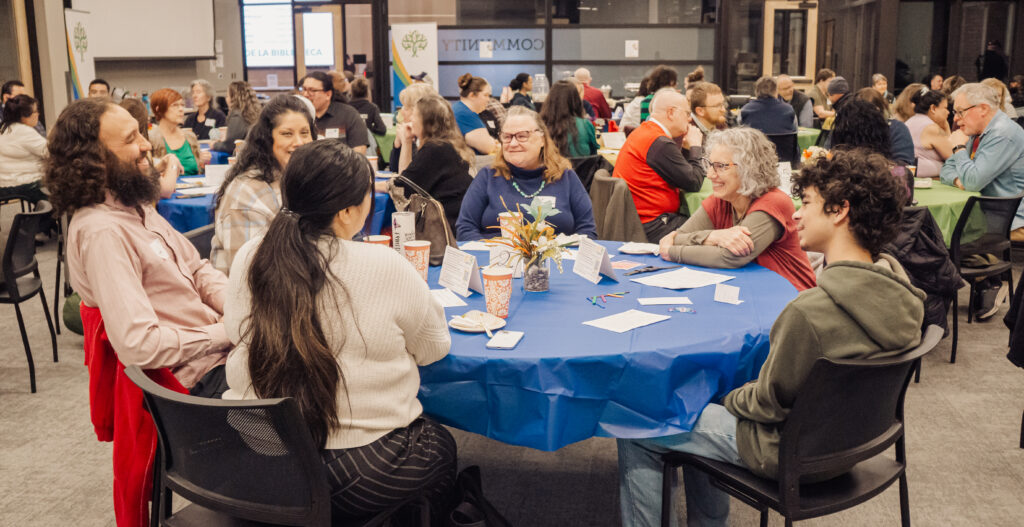
In one of our recent gatherings, someone said:
“This is a developmental process. It’s not enough to have one meal, or one conversation—or even ten.”
That’s right.
Trust grows slowly because people grow slowly.
Especially across difference.
Especially when there has been fear, harm, or distance.
You can’t rush that.
Belonging and civic muscle
The Rippel Foundation uses two simple but powerful ideas:
Belonging and civic muscle.
We need both.
Belonging means:
- I am seen and accepted
- I see others that way too
- And we believe others see us that way
Without belonging, people withdraw—or defend.
But belonging alone is not enough.
We also need civic muscle:
- The ability to understand what’s happening
- To make decisions together
- To act for the common good
A healthy society requires both:
- Relationships strong enough to hold us together
- Capacity strong enough to solve problems together
Why we get this wrong
When things feel urgent, we tend to skip steps.
We try to:
- Jump straight to solutions
- Debate ideas before trust exists
- Push people faster than they can grow
- Act before connecting to the larger network
But without belonging, civic muscle doesn’t develop.
And without civic muscle, belonging doesn’t lead anywhere.
So we end up stuck.
What actually works
In communities across the country, we’re seeing something different.
People start small.
They ask simple questions:
- What do you love about this place?
- What matters most here?
They work on practical things:
- A community project
- A shared concern
- A local issue
And something begins to happen.
Trust builds.
Not all at once—but over time.
And as trust builds:
- People become more open
- More curious
- More willing to listen
That’s when deeper conversations become possible.
That’s when civic muscle starts to grow.
You can’t rush formation
One leader shared this insight:
“In our groups, people don’t start by talking about trauma.
But after six months… they bring it up themselves.”
That’s how it works.
Not forced.
Not scheduled.
Not engineered.
But emerging from relationship.
The work in front of us
If we want to renew our civil contract, we have to accept something difficult:
We cannot rush the human process.
But we can work at multiple levels at once:
- Some people are ready for deep conversations
- Some are ready for shared action
- Some are just ready to show up
All of it matters.
All of it builds toward something larger.
What I am learning
Urgency matters.
But formation matters more.
If we skip the work of building belonging, we weaken everything that follows.
If we ignore the work of building civic muscle, we limit what belonging can become.
The future we want requires both.
And both take time.