Here is where I believe a real opening appears.
Across cultures, continents, and centuries, wisdom traditions have named remarkably similar public values. These values were not designed to win arguments or decorate sanctuaries. They were shaped to help human beings live together without destroying one another.
They functioned as a kind of social contract—shared commitments that made cooperation possible.
Across traditions—from Atheism to Zoroastrianism—we repeatedly encounter values such as:
- Every human being has inherent dignity
- Power must be limited and accountable
- The vulnerable deserve protection
- Truth matters
- Community comes before unchecked self-interest
- Justice and mercy belong together
These were not abstract ideals. They were practical wisdom for shared life.
Today, trust in institutions is near historic lows. Trust in one another is fragile. Many assume that our cultural and religious diversity makes a renewed social contract impossible.
I believe the opposite may be true.
The wide agreement across traditions in the United States creates a rare and fragile opportunity:
- Broad agreement on shared public values
- Deep freedom for cultural, religious, and personal difference
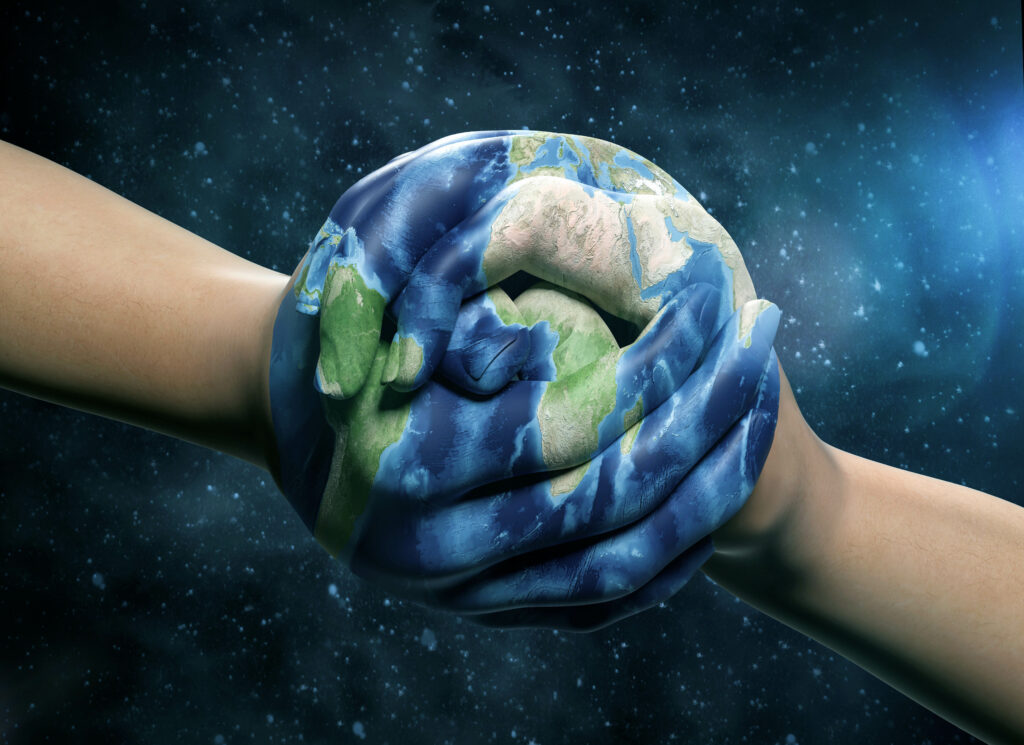
This is not about blending religions or enforcing uniform belief. It is about renewing a civic covenant—a shared understanding of how we treat one another in public life.
Faith does not need to retreat into a theme park.
And it does not need to rule by force.
There is a third way:
- Wisdom traditions that help hold us together
- Public values shaped by shared moral insight
- A society where difference is real, and dignity is non-negotiable
Many people are already longing for this—even if they don’t yet have language for it.
Paths to Understanding is working to Gather Neighbors and Grow Trust. We are now working both the bridge building space, and the civic renewal space.