
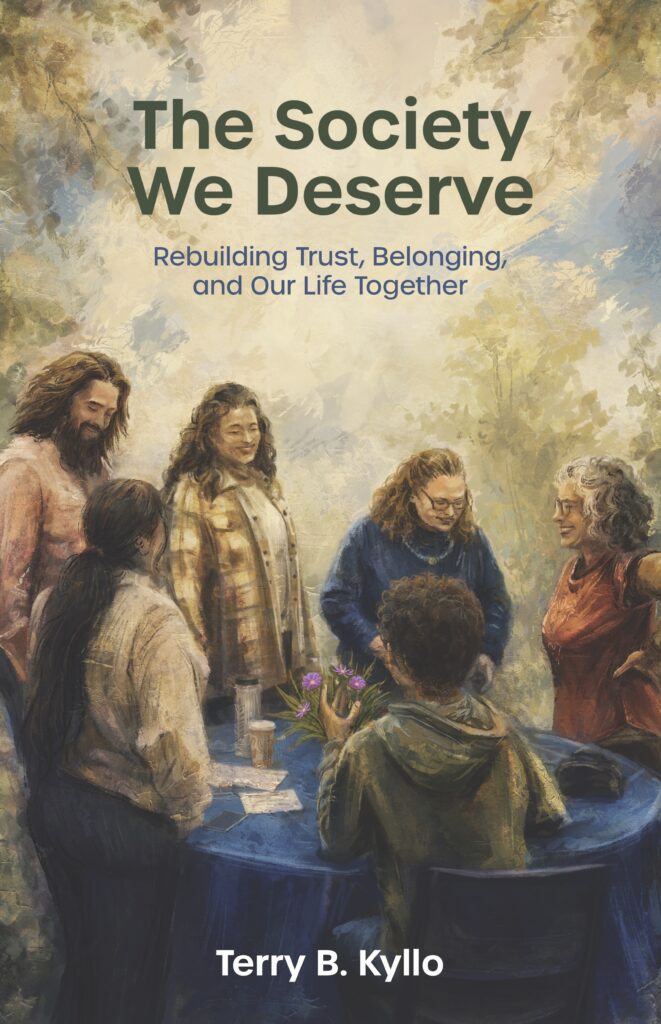
For the past few weeks, I have been telling you about the argument of my new book: that we haven’t lost our values, we’ve lost each other; that morality is cooperation, so trust must be rebuilt through relationship; that evidence about groups must come from experience with groups. This week I want to talk about the only question that finally matters.
Who sets the table?
Here is what thirty-five years of ministry taught me about how people actually engage. General announcements recruit almost no one. But a personal invitation, by name, followed by belonging alongside people who know your story — that produces volunteers who serve for decades. It is a deep law of shared life: people engage when they feel they belong, not when they are told they should.
We keep getting this backwards. We lead with duty — you should care, you should participate, you should volunteer — and then call people apathetic when they do not respond. But responsibility-language aimed at the unattached sounds like a bill from a club that never let them in. The people we call apathetic are not apathetic. They are unattached. Belonging comes first. Responsibility follows relationship — the way those thirty families harvested my brother-in-law’s crop not because someone lectured them about civic duty, but because he was theirs.
So someone has to go first. Someone has to make belonging possible. And here is the good news I have been saving for last: the people who actually do this are not saints, celebrities, or credentialed experts. In ten years of this work, the conveners I have watched start real partnerships are a retired schoolteacher. A dental hygienist. A feed store manager. Two grandmothers who could not sleep. And one anxious pastor whose only qualifications were a phone, a fellowship hall, and a conscience that would not let him sleep either.
These are leaders, not outliers. Convening is not a personality type. It is a learnable practice: name your companions, make the first call, set a humble date, share a meal, persist. And you do not have to improvise — the Potluck Project toolkit, which more than 250 communities and organizations have already downloaded, walks you through every step, free.
One more thing about that first call, the one everyone is afraid to make. When someone finally phones the congregation across town, the club they have never visited, the group they have only heard stories about — the most common answer, by far, is this: “We have been hoping someone would call.”
The table is waiting. Someone has to set it.
My book, The Society We Deserve: Rebuilding Trust, Belonging, and Our Life Together, is now available. It is the whole path — from the first casserole to communities solving problems that had defeated them for a generation — told through the stories of ordinary people who decided to go first. I wrote it for one reader: the one who suspects their community needs this and does not know where to start.
Early in the book, I write, “it could be you.” By the end, I revise it: it is you. And then one word larger: It is us.