
What holds us together—and what happens when it frays
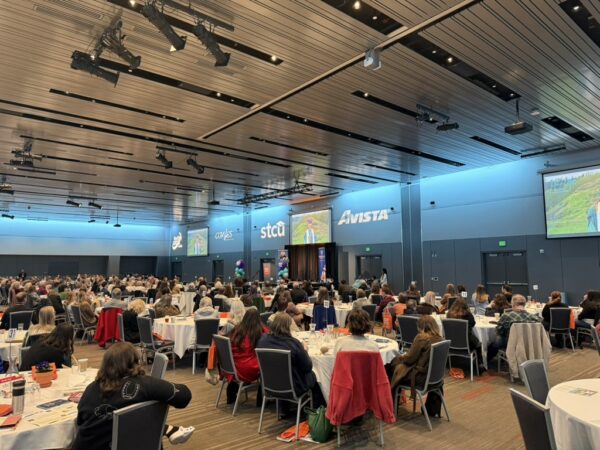
Two weeks ago, I sat in a room with about 400 people in Spokane, brought together by the Innovia Foundation.
They came from small towns and rural counties across eastern Washington and northern Idaho. Farmers. Nonprofit leaders. Faith leaders. Community organizers. People who care about their towns.
I asked a simple question:
“Do you think our country is in a crisis?”
Every head nodded.
Then I asked:
“Do you want to keep living like this?”
And this time, I didn’t get nods. I got voices.
“No.”
It was clear. People are tired. Not just of politics—but of the way we are living with each other.
What we’re really losing
We often talk about polarization, or division, or dysfunction. But underneath all of that is something deeper:
We are losing our civil contract. Not a just a legal contract. A human one.
A shared understanding that says:
- Every person has dignity.
- No one is above or beneath the law.
- We owe something to one another.
This is what allows a diverse society to function at all. Without it, we don’t just disagree. We begin to see each other as less than human.
A wisdom we already know
The idea of a civil contract is not new. Across traditions—religious and secular—there is a shared insight:
We are human together.
From ancient teachings to modern philosophy, we see two core commitments:
1. Recognize the humanity of the other
Even when they are different. Even when we disagree.
2. Treat others as you would want to be treated
What many traditions call “love your neighbor as yourself.”
You see this across the spectrum—from atheist humanism to religious traditions like Judaism, Christianity, Islam, Hinduism, Buddhism, and even in the ethical vision of traditions like Zoroastrianism.
Different language. Same insight.
If we fail to see each other as human, the whole system breaks down.
When the contract frays
Today, that shared understanding is weakening. Not everywhere. Not in everyone. But enough that we feel it.
When the civil contract frays:
- Disagreement turns into contempt
- Contempt turns into fear
- Fear turns into dehumanization
- And dehumanization opens the door to harm
We begin to divide the world into “real people” and “others.” And once that happens, it becomes easier to justify almost anything.
And yet—something else is happening
Here’s what struck me in Spokane. Those 400 people didn’t come because they had nothing better to do. They came because they believe we don’t have to live this way.
Across the country, there are thousands of groups—large and small—working to rebuild trust, connection, and shared responsibility.
Most of them don’t know each other. But they are there.
Quietly doing the work of renewing our civil contract.
Where we begin
We don’t renew the civil contract through arguments. We renew it through relationships.
By:
- Seeing one another as human again
- Listening to stories, not just positions
- Acting together for the good of our communities
This is not quick work. But it is real work. And it is already happening.
What I am learning
We are not starting from nothing. The wisdom we need is already here. The people are already here.
What we are missing is connection—seeing each other, learning from each other, and growing together.
The civil contract is not restored all at once. It is renewed, one relationship at a time.
The question I’m sitting with
What would change if we began—not with what we believe—but with learning to see each other as human again?